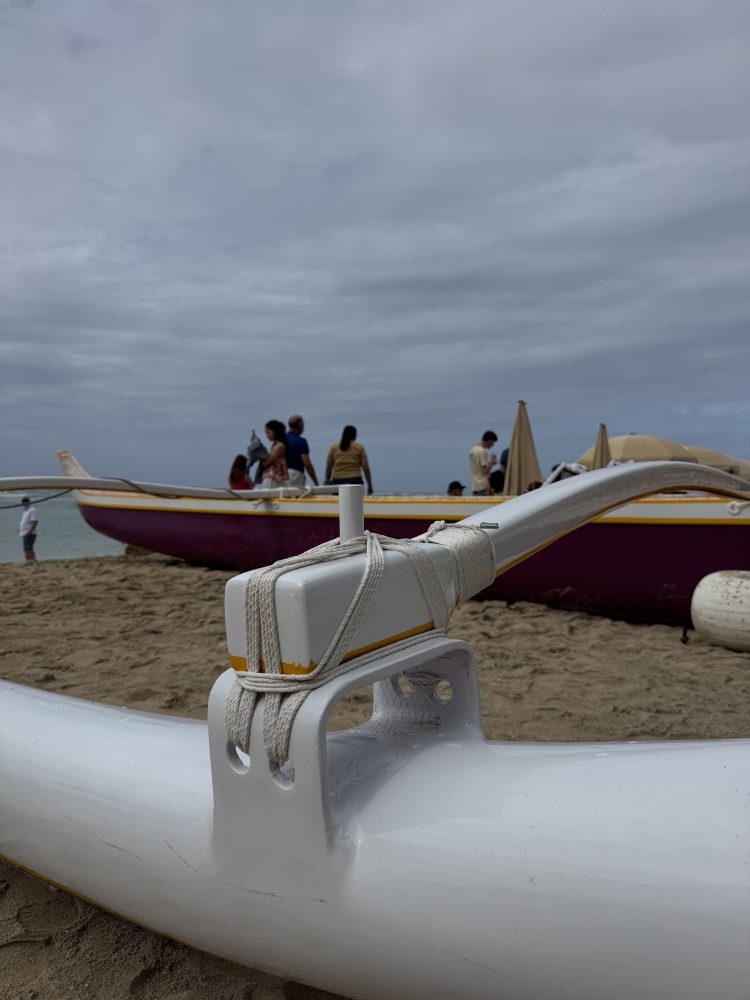
Restoring the Ride: The Craft and Care Behind the Canoe
By Kyani Bateman
At Waikīkī Beach Services, the experience of outrigger canoe surfing at waikiki beach may last only a few moments, but those moments become something far greater — a core memory etched into the hearts of our guests long after they’ve left the shore. Riding a wave on a canoe is fleeting, yet the joy, the rush, and the connection to the ocean stay with you forever. Behind every smooth launch and steady glide are hours of unseen work, knowledge, and care. The beachboys know that the canoe is more than equipment. It is a vessel of culture, history, and deep connection to the sea. When one of our canoes recently returned from the shop, that responsibility called them back to the basics — because every everlasting memory our guests carry home begins with the work done long before they ever step aboard.
Preparing the Foundation
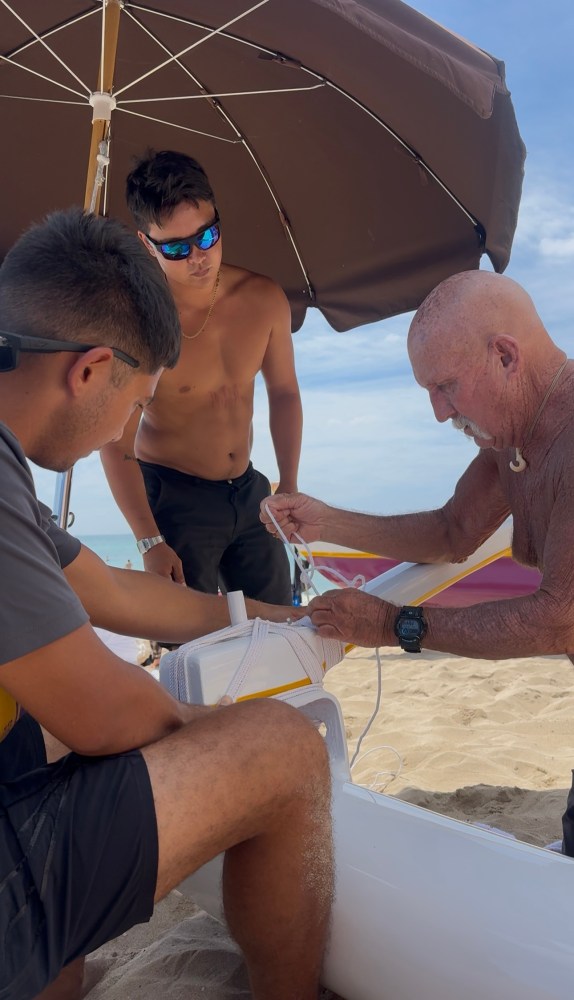
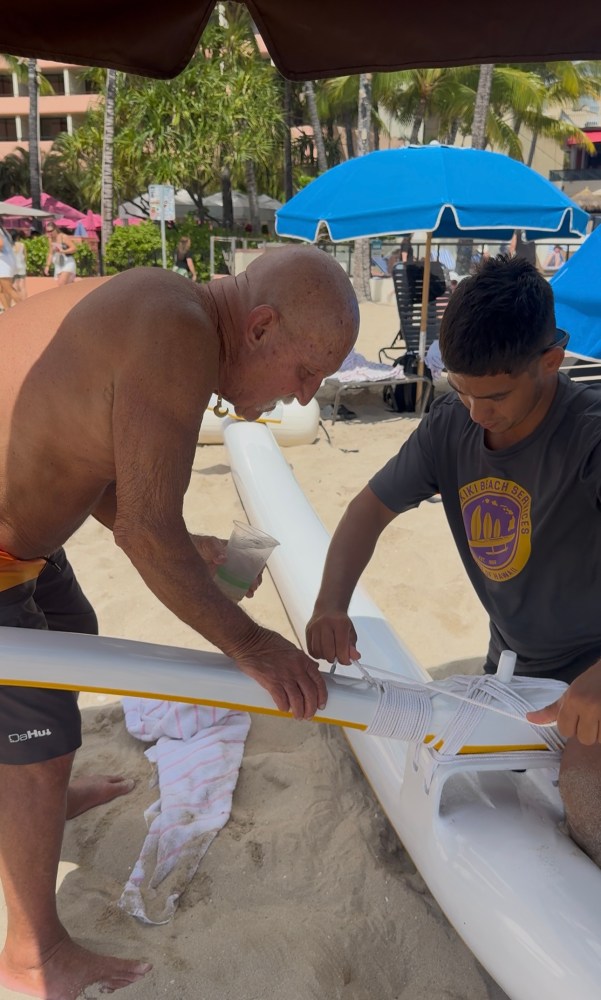
Before a canoe ever touches the water, every detail must be right. The kaula (rope) is one of the most critical elements, binding together the hull, the ʻiako (crossbeams), and the ama (outrigger float). When the canoe came back, the beachboys didn’t rush the process. They understood that proper rigging begins with preparation.
The kaula had to be stretched, tested, and softened, worked by hand to ensure the right tension and flexibility. Too tight, and it risks stress on the canoe. Too loose, and it compromises stability in the ocean. This step takes patience; it takes experience passed down over time.
The Art of Rigging
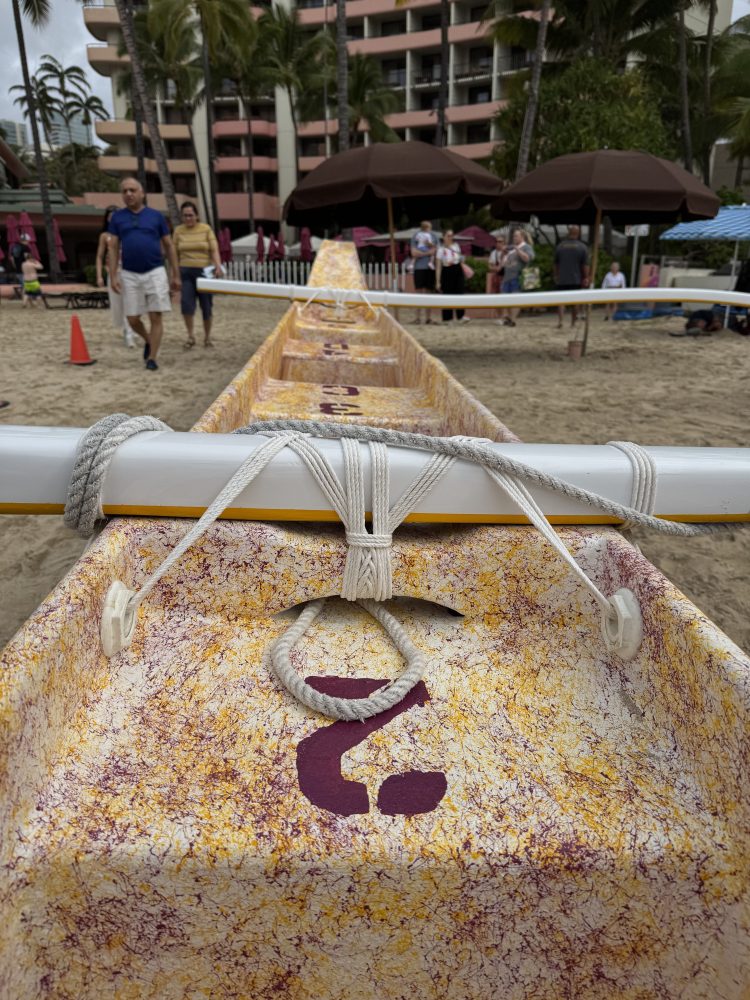
Rigging a canoe is not just mechanical; it is an art form. Each knot, each pull, each adjustment reflects generations of ʻike (knowledge). That afternoon, Blaise, Kaua, and Uncle Mike came together with a shared purpose: to bring the canoe back to life. They moved methodically, checking alignment, tightening lashings, and making micro-adjustments that most would never notice, but every experienced outrigger canoe paddler understands.
Because in the water, those details matter. They determine how the canoe cuts through waves, how it balances under weight, and how safely it carries both crew and guests. Each adjustment, each careful inspection, is an act of respect — for the craft, for the ocean, and for the culture it represents. The beachboys took their time. What could have been rushed was instead honored, because when the canoe is right, everything else falls into place.
More Than Maintenance
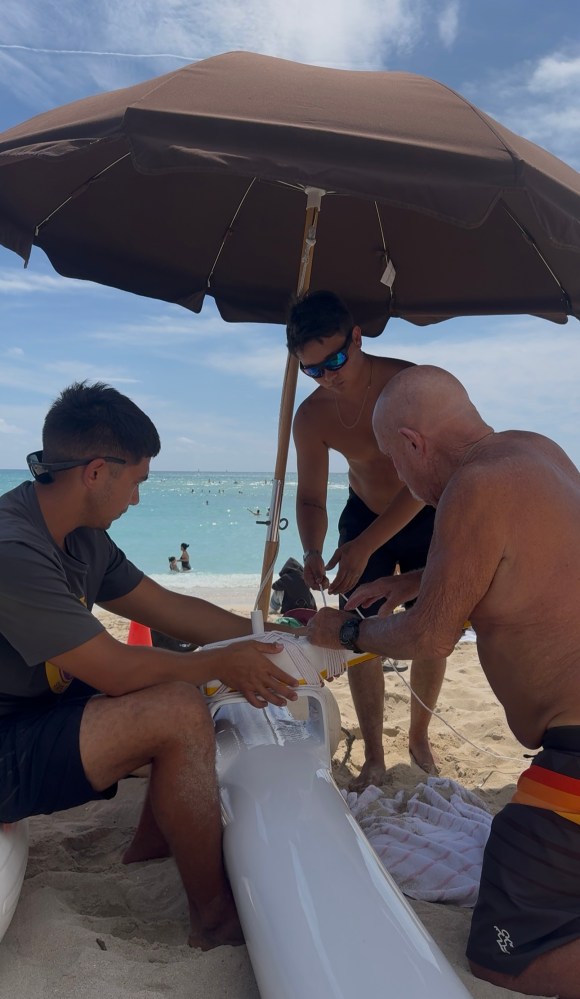
For the beachboys, this wasn’t just a task to check off — it was an act of stewardship. The canoe carries a lineage that stretches back generations across Hawaiʻi and the Pacific. Long before Waikīkī became what it is today, canoes were instruments of survival, exploration, and deep human connection to the sea. That history doesn’t disappear when a canoe enters the water at a beach resort. It lives in every stroke of the paddle, every wave caught, and every guest who experiences the ocean the way Hawaiians always have. To rig one properly is to honor all of that.
Blaise, Kaua, and Uncle Mike understood this. They dedicated their entire afternoon, not because they had to, but because they carried that kuleana. Every pull of the rope, every tightened lashing, was done with intention.
Ready for the Ocean
By the time they finished, the canoe was more than repaired; it was restored. Balanced. Strong. Ready. Ready to meet the waves. Ready to carry laughter. Ready to create new memories for everyone who steps aboard. But more importantly, ready to continue the legacy.
Screenshot
Carrying the Tradition Forward
At Waikīkī Beach Services, moments like this remind us that the magic guests experience on the water begins long before the ride. It begins with the hands, the knowledge, and the dedication of the beachboys who care for these canoes as if they were family. If you’ve ever ridden one of our outrigger canoes, you’ve felt the result of that work, even if you didn’t see it.
And if you’re inspired by the craftsmanship, culture, and commitment behind it, we invite you to experience it for yourself. Come ride with us, learn the stories, and become part of a tradition that continues to move with the rhythm of the ocean.