
A Lau Niu Lesson in Aloha
By Kyani Bateman
Waikīkī is more than a postcard-perfect shoreline—it is a living classroom. A place where culture is not just spoken about, but practiced. Where traditions are not preserved behind glass, but passed from hand to hand in the sand.
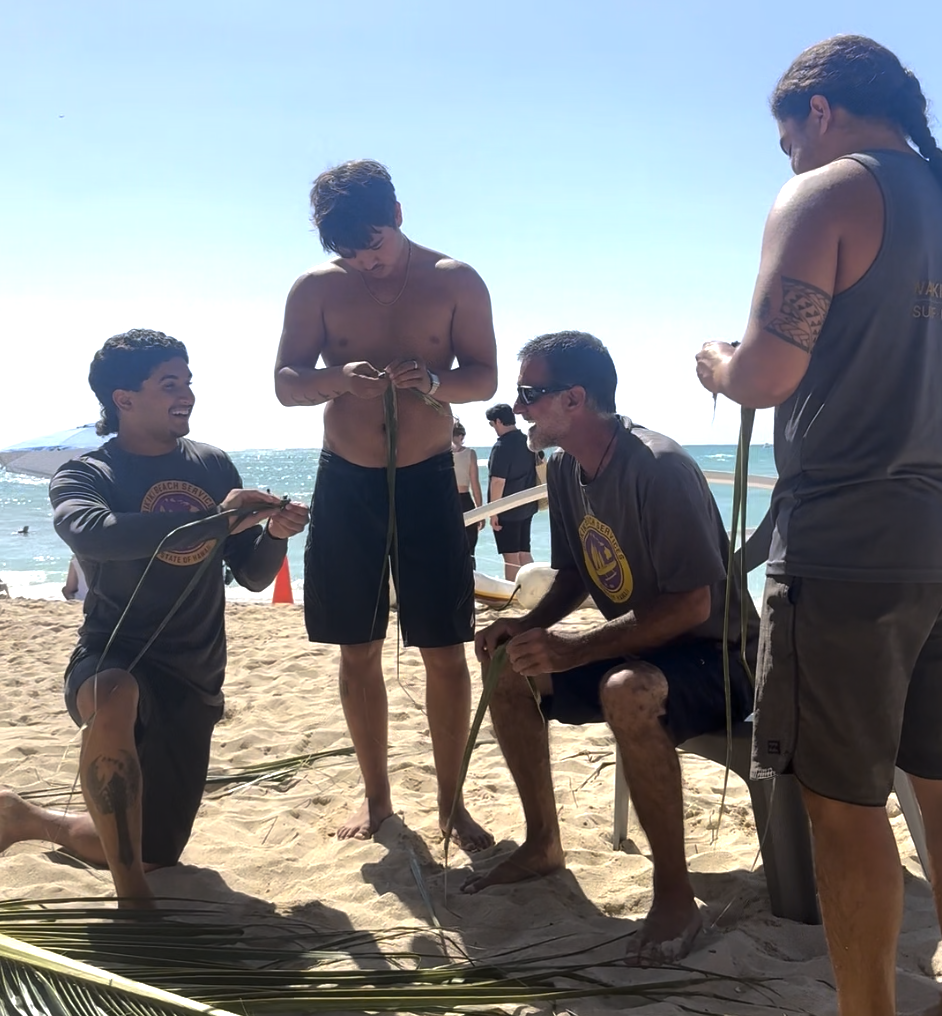
One recent afternoon, that lesson came not in the form of a wave, but in a woven leaf. Here is the moʻolelo (story) of how Diego, Koa, and Blaise learned to weave lau niu roses—and what it means for Waikīkī today.
The Lesson Under the Shade
Under the Hawaiʻi sun, Beach Boy Rich gathered beachboys Diego, Koa, and Blaise close. Not to teach them how to read a set. Not to correct their paddle form. But to teach them how to fold and shape coconut leaves into lokelani (roses) made from lau niu (coconut palm leaf).
Slowly, he showed them how to split the leaf cleanly. How to bend without breaking. How to twist each layer with patience. There was no rush. No performance. Just focus.
In Hawaiian culture, weaving is more than a craft—it is intention. When you create something with your hands, you are embedding time, care, and mana into that object. You are practicing patience. You are practicing presence.
The Beachboys of Waikīkī
The beachboys of Waikīkī Beach Services have always been more than instructors. Historically, Waikīkī’s watermen were cultural ambassadors—teaching visitors how to surf, yes, but also how to respect the ocean, how to move with humility, and how to mālama the ʻāina.
From the days of Duke Kahanamoku to the present, the beach boy tradition has been about more than standing up on a board. It is about standing for something. So when Rich teaches Diego, Koa, and Blaise to weave lau niu, it is part of that same lineage. Knowledge passed down. Skill shared freely. Culture kept alive through action.
Passing It Forward
After finishing their first roses, the boys didn’t keep them. They walked the shoreline and handed them out—to guests sitting in the sand, to keiki watching the waves, and to one another.
A simple gesture.
But in Hawaiʻi, gifting something handmade carries deep meaning. It says: “You are welcome here.” “You are part of this place, even if just for today.”
The lau niu will eventually dry. The green will fade to tan. But the memory of receiving it—the unexpected kindness from someone who calls this shoreline home—will last much longer. That is aloha in motion.
Why These Moments Matter
Waikīkī is often known for its surf breaks and golden light. But its real power lies in moments like these—quiet acts of cultural continuity happening between the waves.
When Diego, Koa, and Blaise learned to weave, they weren’t just picking up a skill. They were stepping into responsibility. The responsibility to honor what was given to them. To pass it on again. To represent Waikīkī with integrity.
When families choose surf schools in Waikīkī with local instructors, they are choosing more than a lesson—they are stepping into a living tradition. They are learning from watermen who understand that surfing is only one part of the story.
Because in Waikīkī, sometimes the most important lessons aren’t taught in the lineup.
They’re woven, by hand, in the sand.